UD Technology:
Engineered for Impact
The science behind Uni-Directional protection. Advanced fiber alignment for superior ballistic performance without the weight.
UD vs Woven Technology
Comparing traditional structural limitations with next-generation material science.
Traditional Woven Limitations
Traditional woven fabrics suffer from fiber crimp—the waviness introduced by interlacing fibers.
This crimp forces fibers to straighten under load before they can effectively carry tensile stress, resulting in inefficient energy absorption and reduced ballistic performance.
The UD Advantage
Uni-Directional fibers are laid parallel, completely eliminating fiber crimp. This straight-fiber architecture allows tensile loads to be carried directly along the fiber axis, maximizing energy absorption efficiency and controlled load distribution throughout the material, resulting in superior bullet capture and controlled projectile deceleration.
Process Technology
0°/90° Cross-Ply
Lamination
Our proprietary process aligns fibers precisely at 0 and 90 degrees. This orthogonal orientation creates a shield that disperses impact energy laterally rather than letting it penetrate through, providing superior multi-hit capability.
Fiber Alignment
Raw fibers are tensioned and aligned perfectly parallel.
Resin Application
A proprietary thermoplastic matrix bonds the fibers.
Cross-Ply Construction
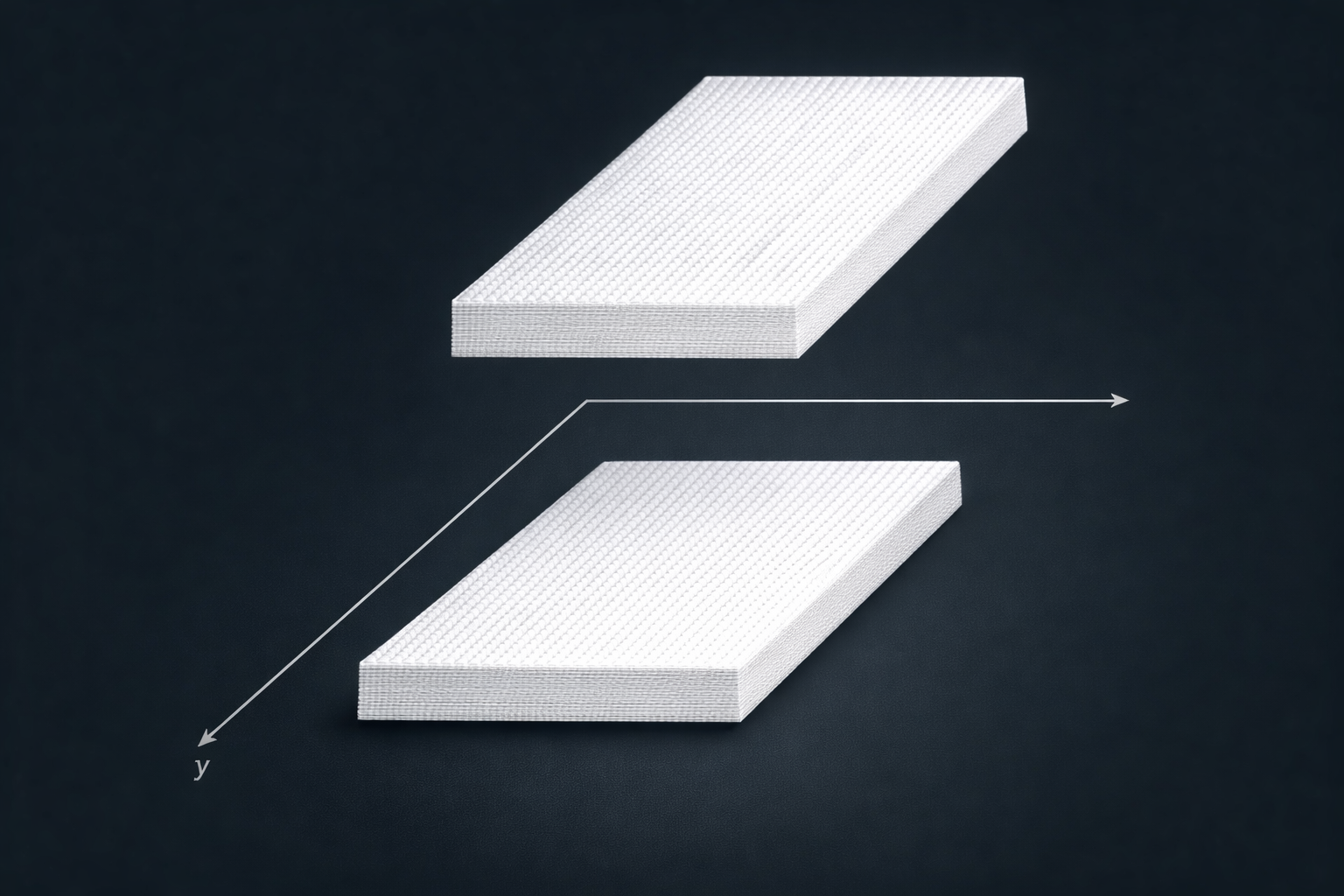
Two layers are laminated at 90° angles to form the final sheet.
The Performance Result
Engineered to exceed standards while maximizing mobility and comfort for the operator.
Weight Reduction
40%
Reduces system weight for improved mobility.
Projectile Stoppage
Best
Substantially reduced armor weight.
Ballistic V50
Exceeds
Designed to surpass performance targets.